















Product Description
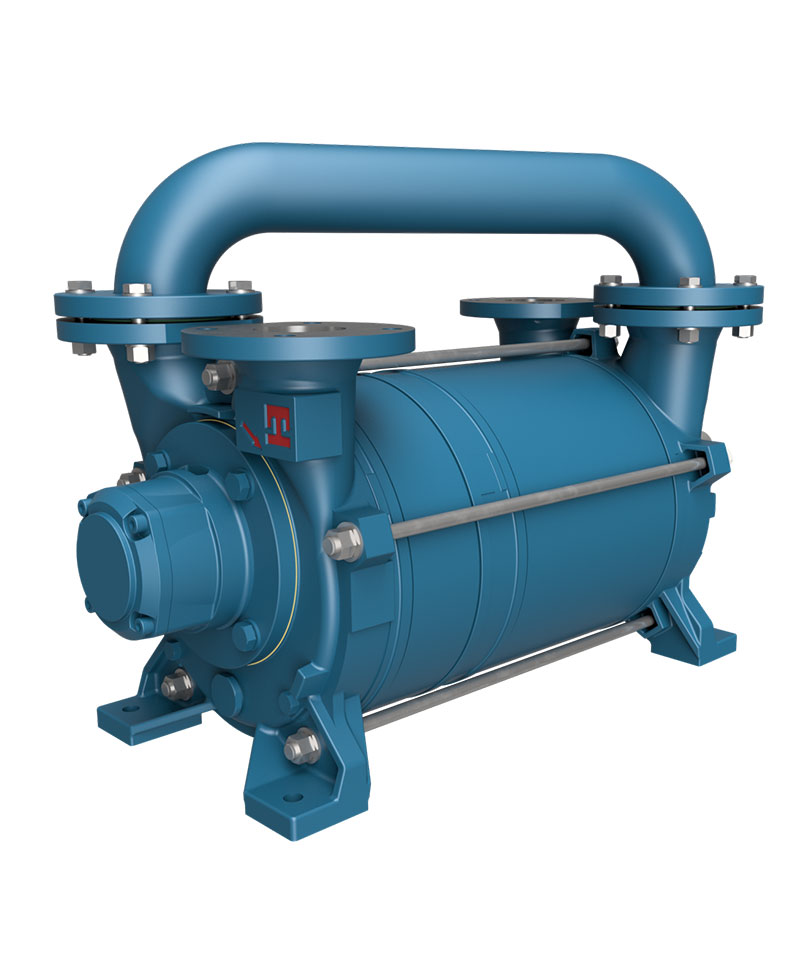
Pompetravaini TRH Double-Stage Liquid Ring Vacuum Pumps
The Pompetravaini TRH Double-Stage Liquid Ring Vacuum Pumps deliver high-vacuum performance for demanding industrial processes. Their two-stage liquid ring design compresses extracted gas progressively. Therefore, the TRH range can achieve deeper vacuum levels than many conventional single-stage systems.
Moreover, the series offers capacities up to 3,500 m³/h and vacuum levels down to approximately 33 mbar. Consequently, these pumps suit large process systems that need reliable removal of compatible gases, vapours and condensable streams.
TRH Two-Stage Liquid Ring Vacuum Design
The double-stage arrangement divides gas compression between two consecutive pumping stages. As a result, the Travaini TRH liquid ring pump performs efficiently in high-vacuum duties.
During operation, the rotating impeller creates a liquid ring inside the casing. This liquid ring seals the compression chambers and absorbs heat. Therefore, the pump can handle compatible moist gases, vapours and condensable loads effectively.
Moreover, liquid ring technology provides a practical solution where conventional dry-vacuum methods may struggle with wet process streams.
Key Features and Benefits
The Pompetravaini TRH Double-Stage Liquid Ring Vacuum Pumps provide:
- Double-stage liquid ring construction
- High-vacuum capability
- Capacity up to 3,500 m³/h
- Vacuum down to approximately 33 mbar
- Reduced number of internal components
- Rigid mechanical construction
- Short shaft for improved stability
- Reduced shaft-deflection risk
- Low vibration at seals and bearings
- DIN 24960 mechanical-seal compatibility
- Tandem and back-to-back seal options
- Cartridge mechanical-seal options
- Corrosion-resistant material choices
- Broad model range for industrial processes
Together, these features support dependable continuous process-vacuum operation.
Robust TRH Vacuum Pump Construction
Pompetravaini uses fewer internal components in the TRH high-vacuum pump. Consequently, this approach increases structural rigidity and simplifies assembly.
Moreover, technicians can access important internal parts more easily during planned servicing. Therefore, facilities can simplify maintenance while maintaining dependable mechanical performance.
In addition, the straightforward internal arrangement can help reduce maintenance complexity over the pump’s operating life.
Short-Shaft Liquid Ring Pump Design
The TRH pump uses a relatively short shaft. Therefore, the design reduces the risk of shaft deflection and excessive vibration.
Furthermore, reduced shaft movement limits unwanted loads on bearings and mechanical seals. Consequently, the Pompetravaini TRH Double-Stage Liquid Ring Vacuum Pumps can maintain stable operation while controlling component wear.
As a result, the short-shaft arrangement supports reliable performance in continuous high-vacuum applications.
TRH Mechanical-Seal Options
The Travaini TRH vacuum pump accepts DIN 24960 unified mechanical seals. Moreover, users can choose tandem or back-to-back double mechanical seals for more demanding containment duties.
Alternatively, cartridge-type seals can suit specialised applications. Therefore, engineers can select the sealing arrangement according to gas composition, service liquid, operating conditions and maintenance requirements.
Corrosion-Resistant Material Options
Pompetravaini offers special materials for aggressive operating environments. Available options may include:
- Ni-Resist D2B
- Hastelloy B
- Hastelloy C
- Uranus B6
Consequently, suitable TRH configurations can handle selected corrosive gases, vapours and service liquids.
However, engineers should always verify chemical composition, concentration and temperature before selecting materials. Otherwise, unsuitable construction materials may reduce equipment life.
Service Liquid and Recirculation
A liquid ring vacuum pump requires a continuous supply or controlled circulation of service liquid. During operation, this liquid creates the sealing ring, removes compression heat and supports stable vacuum generation.
Therefore, the system must replenish or recover part of the service liquid leaving with the discharged gas.
Alternatively, a recirculation package can separate the gas, cool the service liquid and return it to the pump. As a result, facilities may reduce water consumption and liquid discharge.
Moreover, correct service-liquid temperature helps maintain the required vacuum performance.
TRH Pump Performance Range
The complete TRH Series provides:
- Maximum capacity: Up to 3,500 m³/h
- Vacuum level: Down to approximately 33 mbar
- Pump arrangement: Double stage
- Technology: Liquid ring
- Primary duty: High vacuum
However, these figures represent limits across the complete range. Therefore, users should not assume that every model delivers 3,500 m³/h at 33 mbar.
Instead, actual performance depends on pump size, speed, inlet conditions, gas composition and service-liquid temperature.
Pompetravaini TRH Applications in India
The Pompetravaini TRH Double-Stage Liquid Ring Vacuum Pumps may support industrial applications across India such as:
- Chemical-process vacuum
- Petrochemical processing
- Pharmaceutical manufacturing
- Vacuum distillation
- Reactor evacuation
- Solvent and vapour recovery
- Vacuum filtration
- Vacuum drying
- Condenser evacuation
- Deaeration systems
- Food-processing vacuum
- Central industrial vacuum systems
Moreover, liquid ring technology can handle compatible condensable vapours efficiently. Nevertheless, engineers should review gas composition, condensable loading and service-liquid conditions for each application.
Selecting the Correct Travaini TRH Pump
Correct selection depends on:
- Required suction capacity
- Operating vacuum
- Gas composition
- Inlet temperature
- Condensable loading
- Service-liquid type and temperature
- Construction materials
- Mechanical-seal arrangement
- Motor speed and power
Therefore, users should select the Pompetravaini TRH Double-Stage Liquid Ring Vacuum Pumps from model-specific performance data.
Otherwise, unsuitable service-liquid conditions, incorrect materials or improper operating parameters may reduce capacity, vacuum performance and equipment life.
Product Enquiries in India
The Pompetravaini TRH Double-Stage Liquid Ring Vacuum Pumps are presented through Pumps Bharat for chemical, petrochemical, pharmaceutical, vacuum distillation, filtration, drying, vapour recovery and other high-vacuum applications across India.
When submitting an enquiry, please provide the gas composition, inlet temperature, required capacity, operating vacuum, condensable load and preferred service liquid. Consequently, the available TRH models, materials and sealing arrangements can be evaluated against the application requirements.