















Product Description
Roots Blower Pump
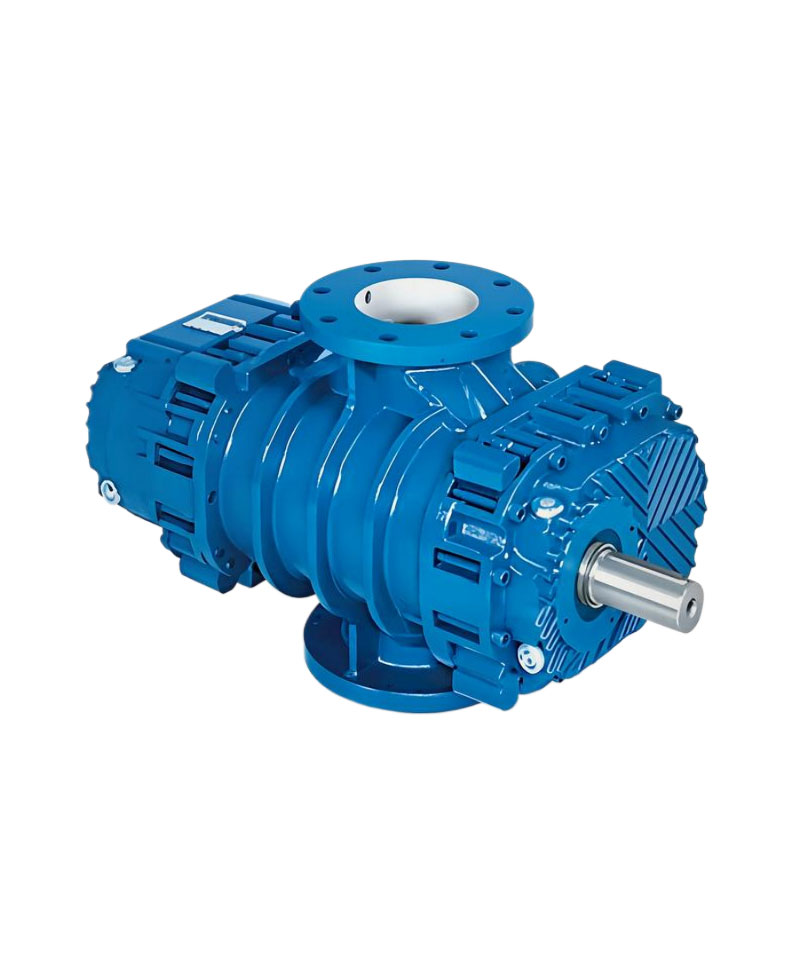
The Roots Blower Pump provides reliable air movement for industrial pressure and vacuum applications across India. Its tri-lobe positive-displacement design delivers a consistent volume of air while helping reduce pulsation, vibration and operating noise.
Moreover, the compression chamber requires no internal oil lubrication. Therefore, the blower provides oil-free air for processes where cleanliness and dependable airflow remain important.
Tri-Lobe Roots Blower Design
The blower uses two precision-manufactured tri-lobe rotors mounted on parallel shafts. These rotors turn in opposite directions inside a rigid casing.
During operation, the lobes trap air at the inlet and carry it around the casing towards the discharge. Consequently, the Roots Blower Pump delivers a nearly constant volume of air at a given speed.
Key Features and Benefits
The Roots blower provides:
- Positive-displacement operation
- Precision tri-lobe rotor profile
- Pressure and vacuum capability
- Oil-free air delivery
- Reduced airflow pulsation
- Lower operational noise and vibration
- Heavy-duty bearings
- Hardened timing gears
- Non-contact rotor operation
- Robust cast-iron construction
- Reliable labyrinth sealing
- Large inlet and outlet connections
- Consistent airflow under changing pressure
- Long operating life
- Straightforward routine maintenance
Together, these features support continuous and demanding industrial applications.
Consistent Positive-Displacement Airflow
A positive-displacement blower transfers a fixed volume of air during each rotor revolution. Therefore, airflow remains relatively consistent as system pressure changes within the approved operating range.
However, the blower does not create pressure internally in the same way as some compressors. Instead, discharge pressure develops as the unit works against resistance in the connected pipeline or process.
Consequently, engineers should size the Roots Blower Pump according to required airflow and total system back pressure.
Reduced Pulsation and Noise
The tri-lobe rotor profile produces more frequent, smaller air pulses than a conventional twin-lobe design. As a result, it creates smoother airflow and reduces pressure pulsation.
Moreover, smoother power cycles can reduce impact loads on bearings, foundations and connected pipelines. Therefore, a correctly installed tri-lobe Roots blower can provide quieter and more stable operation.
Oil-Free Air Delivery
The rotors operate without touching each other or the internal casing. Precision timing gears maintain the required clearances between moving components.
Therefore, the air chamber does not require oil lubrication. Oil remains confined to the bearing and gear areas, while sealing arrangements help separate it from the airflow.
Consequently, the Roots Blower Pump suits aeration, pneumatic conveying and process-air duties that require oil-free air.
Pressure and Vacuum Applications
The same positive-displacement technology can support both pressure and vacuum duties. However, the blower configuration, rotation direction, cooling and accessories must match the intended application.
Pressure systems use the blower to deliver air against pipeline or process resistance. Alternatively, vacuum arrangements remove air or gas from a process.
Therefore, engineers should confirm the required pressure or vacuum rating before selecting a blower.
Durable Mechanical Construction
A rigid casing and accurately machined end plates help maintain alignment between the rotor shafts. Meanwhile, hardened timing gears synchronise rotor movement and prevent rotor contact.
Heavy-duty bearings support the rotating assembly during continuous operation. In addition, dynamically balanced components help control vibration and mechanical stress.
As a result, the industrial Roots blower can provide dependable service when operators maintain correct lubrication, alignment and operating temperature.
Piping and Installation Considerations
Correct piping has a major effect on blower performance. Therefore, installers should use adequately sized pipes, large-radius bends and minimal flow restrictions.
Sudden reductions in pipe diameter increase pressure loss and motor power demand. Likewise, throttling the inlet or discharge is generally unsuitable for controlling blower capacity.
Instead, operators should use approved speed control, system design or a manufacturer-recommended capacity-control arrangement.
Roots Blower Pump Accessories
A complete package may include:
- Electric motor
- Base frame
- Belt or direct-coupled drive
- Inlet air filter
- Inlet and discharge silencers
- Pressure or vacuum gauge
- Safety relief valve
- Non-return valve
- Flexible connectors
- Anti-vibration mounts
- Acoustic enclosure
- Control panel
- Temperature and pressure protection
However, accessory requirements depend on the application and installation environment.
Roots Blower Applications in India
The Roots Blower Pump may support applications across India such as:
- Wastewater-treatment aeration
- Sewage-treatment plants
- Aquaculture aeration
- Pneumatic material conveying
- Cement and fly-ash transfer
- Filter backwashing
- Combustion-air supply
- Vacuum conveying
- Chemical processing
- Textile manufacturing
- Paper and pulp production
- Steel and mineral processing
- Food-processing air systems
- Industrial gas circulation
For example, wastewater-treatment plants use tri-lobe blowers to provide consistent air to biological aeration tanks. Meanwhile, pneumatic conveying systems use controlled airflow to transport powders and bulk materials through pipelines.
Selecting the Correct Roots Blower Pump
Correct selection depends on:
- Required airflow
- Discharge pressure or vacuum level
- Inlet conditions
- Gas composition
- Operating hours
- Ambient temperature
- Installation altitude
- Pipeline pressure losses
- Electrical supply
- Noise requirements
Therefore, engineers should select the Roots Blower Pump from manufacturer performance data for the actual operating conditions. Otherwise, an unsuitable blower may overheat, consume excessive power or fail to provide the required airflow.
Product Enquiries in India
The Roots Blower Pump is presented through Pumps Bharat for wastewater treatment, pneumatic conveying, aquaculture, chemical processing, industrial vacuum and other air-handling applications across India.
When submitting an enquiry, please provide the required airflow, pressure or vacuum level, gas type, operating hours, ambient conditions and electrical supply. Consequently, the available Roots blower configurations can be evaluated against the application requirements.